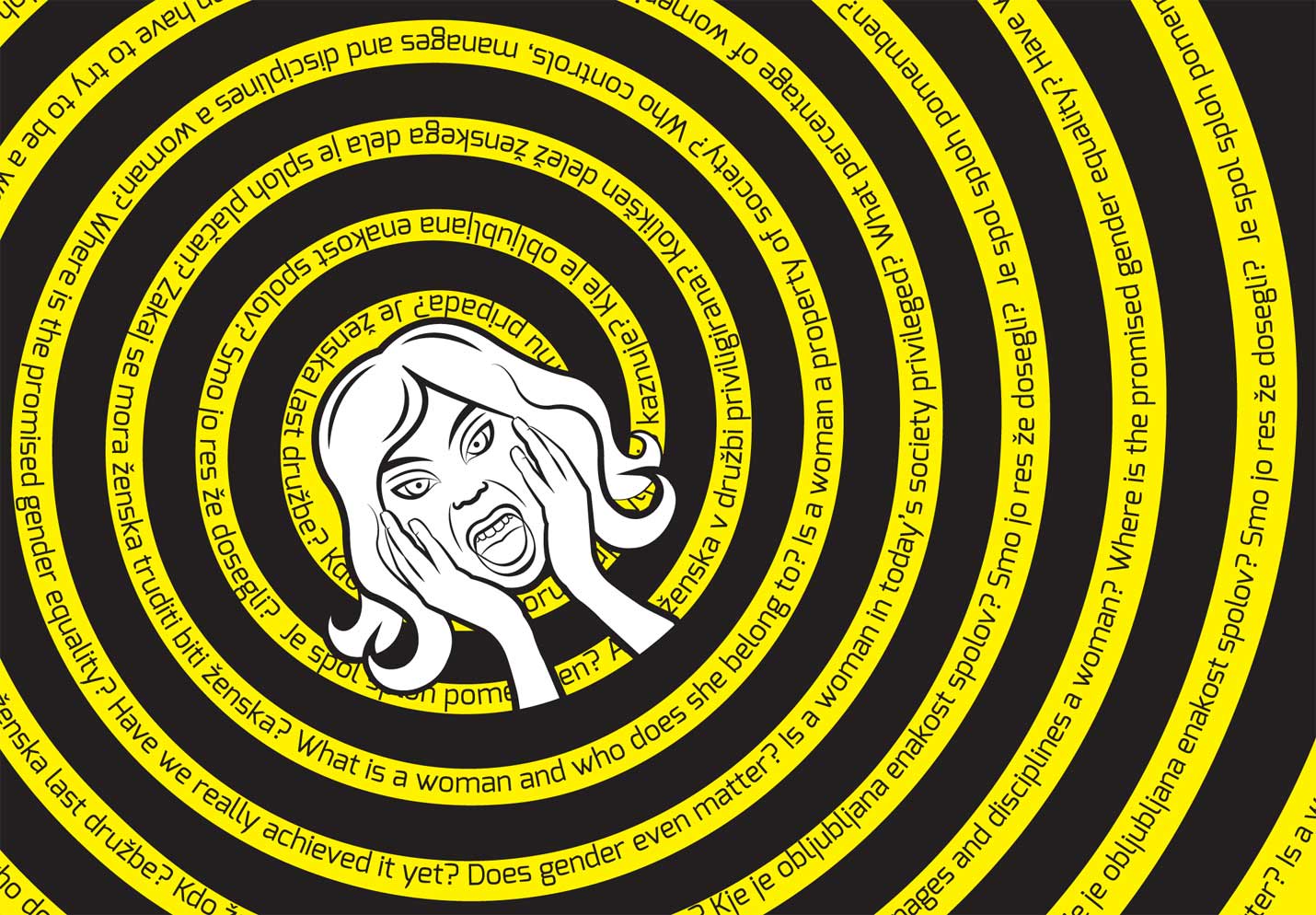
Poster by Anna Ehrlemark
The special autumn edition of feminist and queer festival Red Dawns is going to happen between October 12th and 26th 2013 at various venues in Ljubljana, right after the 19th edition of City of Women fest. Our joint events are happening under the title Red Dawn above the City of Women.
Expect a lot! And check out the full program here.
Below is my introductory text for the catalogue. Further below is the Slovene version. Also recommended reading: Vesna Leskošek's text Personal is Political and Public Privatised and Mara Vujić's
All Different, All Equal!
Red Dawn above the City of Women
Since 2000, Red Dawns festival has been working inside, alongside, and against
the society, which disfavours women and sexual minorities – especially those
that emphasize their markedness in order to point out the sexual hierarchies
otherwise taken for granted. Because the promise of equality – nurtured by
the image of red-haired heroine Zora, and the red morning sky – in capitalist
barbarism is moving further away, it has not been easy to continue to organize
the festival. Why this is so and where is the neoliberal re-patriarhalization of
the society taking us will be explained by two theorists,
Lilijana Burcar and
Jasmina Husanović. Their lectures are going to wrap up the extensive festival
program, dedicated to the Grand Domestic Revolution and the expansion of
critical literacy.
As far as this year's festival image is concerned, our long-term designer
Anna Ehrlemark decided to make use of the barbed flower symbol so as to
pay homage to our co-operation with the
Uprising Social Workers (Vstajniške
socialne delavke). In March this year we launched a so-called Wall of Shame
– a blog collecting misogynist, sexist, and homophobic statements of famous
Slovene personalities. The fact that intellectuals and politicians can afford
to say anything without consequences, without punishment, is ‘žabotno’, or
sad indeed. ‘Žabotno’ is a neologism, created out of the surname of a Slovene
writer, whom we ‘awarded’ with a barbed flower for the sexist statement of
the decade. The word found its place in the free dictionary of spoken Slovene
language, Unleashed Tongue (Razvezani jezik). Hopefully, both the Barbed
Flower Award and Unleashed Tongue represent a big enough threat to the
Žabot-likes, that, next time, they are going to bite their tongues before saying
something sexist again. The scissors on the posters are, however, not for them;
rather, they represent our desire to cut the world out in our shape.
The festival begins at Metelkova mesto with
Kerry Howarth’s yarn bombing
of public space. She will also conduct a workshop on the basics of knitting
and crocheting. Although knitting is stereotypically linked to women, today's
guerrilla knitting has little to do with the safety of the household. On the
Square with No Historical Memory, just a few steps away from the institutions
defining the artistic canon,
Ana Čigon is going to leave a permanent mark.
Her performance, Dear Ladies, Thank You, will become a unique monument
to feminist, lesbian, and queer artists, excluded from the androcentric and
heteronormative historicization of art.
The conception of the Red Dawns festival is linked both to our need for
collective and public fight against inequalities, and to the need to nurture
our own public and safe space for socializing and the retreat from pressure.
Accordingly, it would have been sinful if we did not dedicate some of our
attention to pleasure. This is the reason why we invited
Bibliothèque Érotique
to Ljubljana. They are a self-organizing library and a group of performers from
Amsterdam, who are going to read erotic stories focusing on the fleshy needs
of women and queers. There is also going to be a sound performance by two
female musicians from Vienna –
chra and
Cherry Sunkist – which will sharpen
our hearing capabilities by performing in pure darkness. Their mixture of pop,
dub, ambient, and minimal techno is going to sound differently in the darkness
than it would with the lights on.
Feminist public spaces are important also because we want to reach out and
make the society understand the importance of feminist issues. This includes
the demand for the inclusion of identity politics into the strivings for the
re-distribution of national and global wealth, or the recognition that the
emancipation of economically most vulnerable women should be a criterion
for the emancipation as such. Until then, we will be working to bring the
oppression of women into the general consciousness.
We address anyone who is willing to listen, as much as that is possible by
organising a spectacular one-month event. We know that the art market, which
we are a part of due to our financial support from the European Commission,
has long been appropriating political art. Besides, feminist art often plays the
role of a social corrective: firstly, by mitigating the effects of social hierarchies,
it is taking on the role that should be played by the social state; secondly, by
favouring self-organized, participatory-based, and collective practices that offer
suggestions for better living, feminist art merges with socially beneficial forms
of activism. Due to this instrumental inclination, there is less space for the
‘impossible’, that is, for the experimentation and expressivity, which have been
historically connected to women, even though we could all use these qualities,
especially today when the political is being reduced to official politics. This is
the reason why the slogan ‘bringing chaos to structure’, which is going to be
enacted on the stage of Menza pri koritu by
Damenkapelle, shall be more than
welcome. We are, however, not sure whether the fact that 'the Commission
cannot be held responsible for any use which may be made of the information
contained’ in Damenkapelle’s relaxing rage, should make us happy or sad.
What furthers the depolitization of our festival is the fact that we, as organizers,
despite European support, remain overworked and underpaid project workers.
Because of that support, the Red Dawns team and the artists are going to be
paid decently for the second time in our fourteen-year-long history. Yet, the
question is what price we are going to pay for this. Are we going to be able
to attend
Inga Cholomogorova's butoh performance on the consequences of
striving for artistic success on her own life? Will we have the time to go to the
workshop on burn-out prevention? The workshop will follow the meeting of
fifteen women's, feminist, LGBTI, and queer initiatives from former Yugoslavia,
where we are going to discuss the possibility of exchanging program items
and of applying for financial support together. All these groups fight for the
public recognition of contemporary women artists, theorists, activists, and
cultural workers in order to increase their – and our own – social security. This
is why our precarious work can nevertheless be seen as a bitter, yet historically
important moment in the long struggle for better working conditions and the
re-distribution of wealth.
The resistance to structural causes of gender asymmetry remains the reason
for our existence and the reason for our continual search for political allies.
This year, we have allied with the City of Women festival. Our joint festival
Red Dawn above the City of Women continues our locally situated feminist
and queer politics. We look across national borders, because we believe that
patriarchy is transnational. We are convinced that borders between genders as
well as between nations and classes can be crossed, moved, and demolished
with art, activism, and theory; that these forms of expression intertwine in
our struggle for the ‘impossible’ – for that which is yet to come. For example,
for a world without sexual violence, which, in the street performance of
ACT
Women, seems far, far away. This performance portrays the hard process that
sexually abused women have to undergo, from the experience of violence up
until the moment they decide to report the abuse to the police and
dare say: ‘Rape is never a woman's fault. The
perpetrator is the one who should be ashamed.’
We hope that our festival reaches you. And we hope
that the critical insights and pleasurable experiences
we offer in our program are going to help you
live – not only survive, but live in hope that
one day, the sun is going to really rise
above the City of Women.
Translated by Ana Makuc.
*
Rdeča zora nad mestom žensk
Festival Rdeče zore od leta 2000 deluje v, ob in proti družbi, ki ni naklonjena
ženskam in spolnim manjšinam, še najmanj tistim, ki opozarjajo na svojo
zaznamovanost, da bi izpostavile samoumevnosti, na katerih slonijo spolne
hierarhije. Vztrajati ni lahko, saj se obljuba enakosti, ki smo jo od samega začetka
gojile v podobi rdečelase razbojnice Zore in rdeče ožarjenega neba, v času
»kapitalističnega barbarstva« očitno oddaljuje. Zakaj se oddaljuje in kam nas sili
neoliberalna repatriarhalizacija družbe, bosta na festivalu pojasnili teoretičarki
Lilijana Burcar in
Jasmina Husanović. Njuni predavanji bosta zaključili obsežen
program, posvečen Véliki gospodinjski revoluciji in širjenju kritične pismenosti.
Naša dolgoletna sodelavka
Anna Ehrlemark se je pri oblikovanju tokratne
festivalske podobe naslonila na simboliko bodeče neže in spomin na sodelovanje
z Vstajniškimi socialnimi delavkami. Marca letos smo postavile Sramotilni
steber, blog, na katerem smo z vašo pomočjo izpostavile mizogine, seksistične
in homofobne izjave slovenskih javnih osebnosti. To, da si lahko brez posledic,
nekaznovano privoščijo vse, se nam je zdelo naravnost žabotno. Neologizem,
izpeljan iz priimka pisatelja, ki je bil zaslužen za seksistično izjavo desetletja,
je medtem našel svoje mesto v prostem slovarju žive slovenščine Razvezani
jezik, kar ob »nagradi« bodeča neža morda predstavlja dovolj veliko grožnjo,
da se bodo žabotneži v bodoče raje ugriznili v jezik. Ostro nabrušene škarje
na plakatu niso namenjene njim, temveč nam samim: krojenju sveta po naših
merah.
Začele bomo na Metelkovi, kjer bo britanska umetnica
Kerry Howarth s prejo
bombardirala javne površine. Ob tem bo pripravila delavnico o osnovah pletenja
in kvačkanja, obrteh, ki jih še vedno povezujemo z ženskami, le da sodobna
urbana pletilska gverila nima kaj dosti opraviti z varnostjo domačega ognjišča.
Na Trgu brez zgodovinskega spomina, nekaj korakov stran od institucij, ki
določajo umetniški kanon, bo trajnejšo sled pustila
Ana Čigon. S performansom
Drage dame, hvala bo postavila svojevrsten spomenik feminističnim, lezbičnim in
queerovskim umetnicam, izločenim iz androcentričnega in heteronormativnega
zgodovinjenja umetnosti.
Festival Rdeče zore ni nastal samo zaradi potrebe po kolektivnem in javnem boju
proti strukturni neenakosti, temveč zaradi enako močne potrebe po negovanju
lastne javnosti: varnih prostorov za druženje in umik pred pritiski. V tem smislu
bi bil pravi greh, če ne bi nekaj pozornosti namenile užitkarjenju. V Ljubljano
smo povabile
Bibliothèque Érotique, samoorganizirano knjižnico in skupino
performerjev iz Amsterdama, ki vam bo brala erotične zgodbe s poudarkom
na mesenih potrebah žensk in spolnih manjšin. Zvočni performans dunajskih
glasbenic
chra in
Cherry Sunkist bo izostril vaš sluh z nastopom v popolni temi.
Njuna mešanica popa, duba, minimalističnega tehna in ambientalne elektronike
bo zvenela povsem drugače, kot bi pod lučmi.
Feministično javnost seveda potrebujemo tudi zato, da bi lahko segale navzven
in celotno družbo prepričale o veljavnosti feminističnih zahtev. Mednje spada
zahteva po vključitvi identitetne politike v prizadevanja za prerazporeditev
(trans)nacionalnega bogastva oziroma predlog, da emancipacija ekonomsko
najranljivejših žensk postane merilo za splošno emancipacijo. Dokler se to ne
bo zgodilo, si bomo prizadevale za osveščanje o specifičnosti zatiranja žensk na
identiteni osnovi.
Nagovarjamo vse, ki so pripravljeni poslušati, kolikor je to mogoče doseči s
tako spektakelskim dogodkom, kot je enomesečni festival. Zavedamo se, da je
umetniški trg, v katerega smo zakoračile ob finančni podpori Evropske komisije,
politično umetnost že zdavnaj posrkal vase. Poleg tega feministična umetnost
pogosto nastopa v vlogi socialnega korektiva: z blaženjem učinkov spolnih
hierarhij opravlja delo, ki bi ga morala opraviti socialna država, s svojimi predlogi
za boljše življenje v obliki samoorganiziranih, participativnih in skupnostnih praks
pa se zlije z družbeno koristnim aktivizmom. V tej instrumentalni naravnanosti
hitro zmanjka prostora za »nemogoče«, za eksperimentiranje in ekspresivnost,
ki ju tradicionalno pripisujejo ženskam, v času enačenja političnosti s tistim,
kar nam uradna politika dnevno meče pod noge, pa ju pravzaprav pogrešamo
vsi. Geslo »vnesimo kaos v strukture«, ki ga bo v Menzi pri koritu udejanjil
münchenski zajebantski oktet
Damenkapelle, bo zato več kot dobrodošlo,
četudi nismo prepričane, ali naj nas to, da njihov sproščujoči bes »v nobenem
primeru ne predstavlja stališč Evropske komisije«, veseli ali žalosti.
K depolitizaciji Rdeče zore nad Mestom žensk dodatno prispeva dejstvo, da
organizatorke kljub evropski podpori ostajamo prezaposlene in podplačane
projektne delavke. Res je, da bo ekipa Rdečih zor zaradi nje drugič v štirinajstletni
zgodovini festivala za svoje delo plačana, in res je, da bodo končno pošteno
plačane tudi nastopajoče, vprašanje je le, za kakšno ceno. Se bomo utegnile
udeležiti butoh nastopa
Inge Cholmogorove o posledicah p ehanja za
umetniškim uspehom na njeno osebno življenje? Bomo imele čas za delavnico
o preprečevanju izgorelosti? Sledila bo srečanju s predstavnicami petnajstih
ženskih, feminističnih, LGBTI in queerovskih pobud iz postjugoslovanskega
prostora, s katerimi želimo premisliti možnosti za izmenjavo programov in
skupno pridobivanje sredstev. Ker si vse prizadevajo za večjo prepoznavnost
sodobnih umetnic, teoretičark, aktivistk in kulturnih delavk, s tem pa tudi za
njihovo (in našo) socialno varnost, je naše prekarno delo vendarle mogoče
razumeti kot grenak, a pomemben trenutek v boju za boljše delovne pogoje in
prerazporeditev denarja.
Upor proti strukturnim vzrokom za spolno asimetrijo ostaja razlog za naš obstoj
in razlog za iskanje zaveznic, ki smo jih tokrat našle v Mestu žensk. Naš skupni
festival Rdeča zora nad Mestom žensk nadaljuje s feministično in queerovsko
politiko, vpeto v ta prostor in čas. Pri tem se oziramo preko nacionalnih meja,
ker jih patriarhat presega, obenem pa smo prepričane, da je tako nacionalne
kot spolne in razredne meje mogoče prestopati, premeščati in rušiti s pomočjo
umetnosti, aktivizma in teorije, ki so medsebojno zavezani »nemogočemu«:
tistemu, česar še ni, a nekoč bo. Recimo svetu brez spolnega nasilja. Ta se v
ulični predstavi beograjskega kolektiva
ACT Women zdi neskončno daleč, saj
obravnava težaven proces, skozi katerega gredo spolno zlorabljene ženske od
nasilne izkušnje do trenutka, ko se odločijo za prijavo in si drznejo reči: »Za
posilstvo ni nikoli kriva ženska. Nasilnež je tisti, ki bi se moral sramovati.«
Upamo, da vas bo Rdeča zora nad Mestom žensk dosegla. Upamo, da vam lahko
poleg kritičnih uvidov ponudimo veselje ob doživetjih, ki nam bodo pomagala
živeti, ne zgolj životariti v upanju na sonce, ki bo nekoč morda zares vzšlo nad
Mestom žensk.